
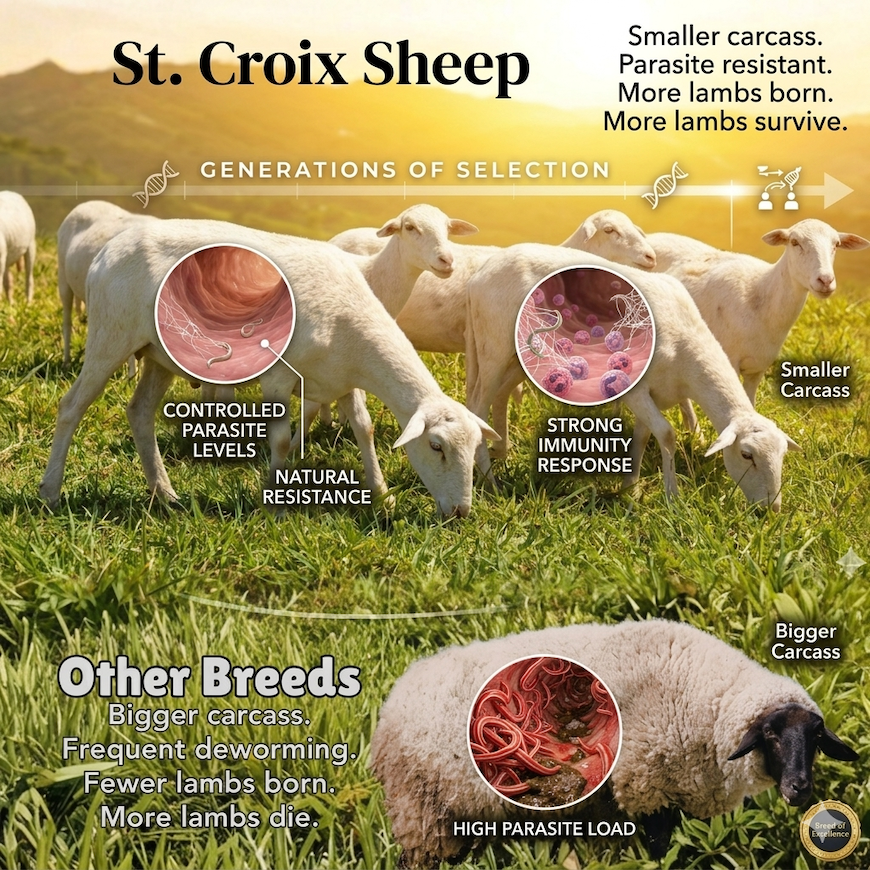
I chose this breed specifically for sustainable sheep production. Although they offer a smaller carcass, they are so much better in other ways that the return on investment makes them the clear choice.
St. Croix sheep essentially have a superpower when it comes to fighting off nasty parasites—especially the dreaded barber pole worm. While other sheep breeds easily get sick, St. Croix sheep have a lightning-fast immune system in their stomachs that traps and destroys worm larvae before they can cause trouble. In fact, they’re so good at this that they cut the number of parasite eggs they shed into the pasture by over 99%!
How They Fight Back
- Quick reaction time: Their immune system kicks into high gear way faster and stronger than other sheep, flooding the area with antibodies to fight off the invaders.
- Literal microscopic nets: Research from West Virginia University shows that their white blood cells actually throw out sticky “nets.” These traps catch the worm larvae, lock them down, and destroy them.
- Heavy reinforcements: They naturally keep a massive amount of immune cells right in their stomach lining, so the body is always armed and ready for a fight exactly where the infection tries to start.
- Stopping the adults: Because they are so efficient at killing the baby worms (larvae), very few ever grow into the blood-sucking adults that cause real damage. This keeps the sheep healthy and drastically lowers the number of worm eggs in their manure.
How Did They Get So Tough?
These sheep originally come from the hot, humid Caribbean. Down there, parasites are a year-round nightmare. After generations of living with this constant threat, only the absolute strongest, most parasite-resistant sheep survived. That intense environment basically forced them to evolve into the ultimate anti-worm machines.
The Science Behind It
- It’s in their DNA: This resistance is hardwired into them. Scientists have pinpointed specific genetic markers (on chromosomes 3 and 20) that act as the control center for this boosted immune response.
- The proof is in the numbers: When researchers compared them to typical wool sheep, like Dorsets, the St. Croix lambs had over 99% fewer worms in their stomachs. It really wasn’t even a contest!
Why They Are the Ultimate Sustainable Choice
All of this natural resistance doesn’t just make for healthier sheep—it makes St. Croix one of the most eco-friendly and sustainable breeds a farmer can raise. Here’s why they are changing the game for modern agriculture:
Climate Resilience: Thanks to their Caribbean roots, these sheep are incredibly heat-tolerant and fantastic foragers. As global temperatures shift and weather gets more unpredictable, having a flock that can thrive in hot, tough conditions with minimal intervention is a massive win for sustainable, future-proof farming.
Ditching the Chemicals: Because they fight off worms naturally, farmers don’t have to constantly pump their flocks full of chemical dewormers (anthelmintics). This keeps harsh medications out of the soil and water supply, and plays a crucial role in preventing the rise of medication-resistant “super worms.”
Cleaner Pastures: That 99% reduction in egg shedding means St. Croix sheep act as natural pasture vacuum cleaners. They eat the larvae but don’t poop out new eggs, actively cleaning the land they graze on rather than contaminating it.
Less Labor, Lower Footprint: Sick sheep require a lot of hands-on care, medication, and resources. By staying naturally healthy, St. Croix sheep drastically reduce the carbon footprint and overhead costs associated with herd management. Plus, as a hair breed, they naturally shed their coats in the spring—meaning absolutely no need for energy-intensive, expensive shearing operations!